45% growth in one year.
That’s how much transaction volume increased in Ajah between Q4 2024 and Q4 2025 — the highest of any neighborhood in Lagos, according to analysis by Private Property Nigeria. While buyers and investors debate the “next big thing” in Lagos real estate, the data already gave the answer: Ajah.
This article is a complete data profile of Ajah as a property market. Not opinion. Not hype. Numbers — covering property prices, rental yields, infrastructure timelines, flood risk, and how Ajah compares to every other major Lagos corridor.
If you’re evaluating where to buy, invest, or build in Lagos, this is the data you need before you commit.
Key Takeaways
- Ajah has the highest transaction volume growth of any Lagos area — a 45% increase from Q4 2024 to Q4 2025, according to Private Property Nigeria.
- A 2-bedroom flat in Ajah starts from ₦35 million ($23,000), making it one of the most affordable entry points in the Lagos property market.
- Property prices per sqm in Ajah range from ₦600,000 to ₦1.6 million — compared to ₦5–9 million per sqm in Banana Island and ₦2.5–6 million in Ikoyi.
- Rental yields in Ajah range from 6% to 9%, outperforming prime island areas (3%–5%) where high purchase prices compress returns.
- The Fourth Mainland Bridge, expected to reach Ajah by 2027–2028, is projected to accelerate property appreciation significantly in the Abraham Adesanya and Addo Road corridors.
Where Exactly Is Ajah?
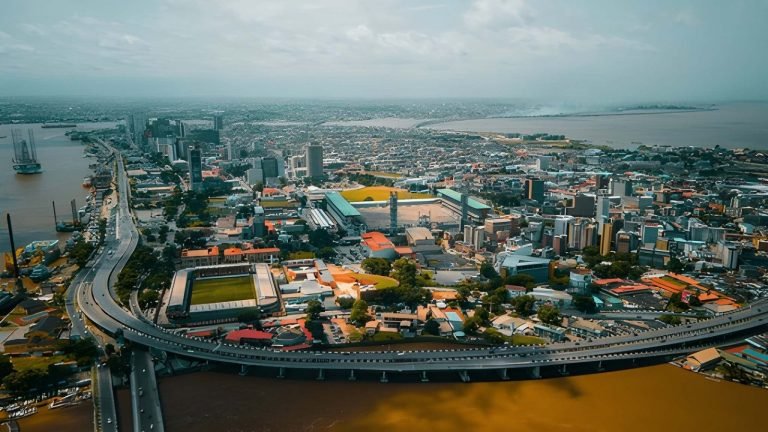
Ajah is located at the eastern end of the Lekki-Epe Expressway in the Eti-Osa Local Government Area of Lagos State. It sits approximately 30 kilometers from Lagos Island and serves as a gateway between the established Lekki corridor and the emerging Ibeju-Lekki frontier.
Key sub-areas within the Ajah property market include Abraham Adesanya, Addo Road, Ado-Ajah, Sangotedo, Thomas Estate, and Ogombo. Each sub-area has distinct pricing characteristics, which we break down below.
Ajah’s strategic position is critical to understanding its growth. It sits at the junction between the matured (and expensive) Lekki Phase 1 corridor to the west and the rapidly developing Ibeju-Lekki zone to the east — where the Dangote Refinery, Lekki Deep Sea Port, and Lekki Free Trade Zone are driving massive infrastructure investment.
Property Prices in Ajah: 2026 Data
Ajah is Lagos’s most active mid-market property zone. Here’s what the data shows as of early 2026.
Buying Prices
According to listings data from Nigeria Property Centre, the average price of houses for sale in Ajah is ₦155 million, with a range of ₦18 million to ₦650 million depending on size, finishing, and exact location.
Here’s the price breakdown by property type:
| Property Type | Price Range (₦) | Price Range ($) |
|---|---|---|
| 2-bed flat (older walk-up) | ₦35M – ₦80M | $23K – $55K |
| 2-bed flat (new estate) | ₦60M – ₦150M | $41K – $103K |
| 3-bed terrace | ₦80M – ₦160M | $55K – $110K |
| 4-bed semi-detached | ₦120M – ₦250M | $82K – $172K |
| 4-bed fully detached | ₦150M – ₦400M | $103K – $275K |
| Land (per plot, 648 sqm) | ₦20M – ₦80M | $14K – $55K |
Per-square-meter pricing in Ajah ranges from ₦600,000 to ₦1.6 million, according to data compiled by The Africanvestor using Nigeria Property Centre listings and Knight Frank Nigeria’s H1 2025 market report.
How Ajah Compares to Other Lagos Areas
| Location | Price per sqm (₦) | Typical 3-bed Price (₦) |
|---|---|---|
| Banana Island | ₦5M – ₦9M | ₦800M – ₦3B+ |
| Ikoyi | ₦2.5M – ₦6M | ₦800M – ₦2B |
| Victoria Island | ₦1.8M – ₦4M | ₦250M – ₦900M |
| Lekki Phase 1 | ₦1.5M – ₦3M | ₦120M – ₦250M |
| Ajah | ₦600K – ₦1.6M | ₦80M – ₦160M |
| Surulere (Mainland) | ₦500K – ₦1.2M | ₦45M – ₦85M |
The data tells a clear story: Ajah offers 60%–75% lower entry costs than Lekki Phase 1, and 80%–90% lower than Ikoyi. For the same budget that buys a 2-bedroom flat in Victoria Island, you can acquire a 4-bedroom detached house in Ajah.
Rental Yields: Why Investors Are Moving to Ajah
Rental yields are where Ajah genuinely outperforms the “premium” Lagos locations.
According to market data from The Africanvestor, gross rental yields in Ajah range from 6% to 9% annually. Compare that to Ikoyi (3%–4%) and Lekki Phase 1 (4%–5%), where high purchase prices compress returns despite strong rents.
Here’s the yield comparison:
| Location | Avg Purchase Price (3-bed) | Annual Rent (3-bed) | Gross Yield |
|---|---|---|---|
| Ajah (Abraham Adesanya) | ₦95M | ₦6.5M | ~6.8% |
| Ajah (Sangotedo) | ₦80M | ₦5.5M | ~6.9% |
| Lekki Phase 1 | ₦180M | ₦8M | ~4.4% |
| Victoria Island | ₦400M | ₦15M | ~3.8% |
| Ikoyi | ₦900M | ₦30M | ~3.3% |
For rental income investors, the data favors Ajah clearly. Lower entry costs combined with strong tenant demand from young professionals and families create yields that double what premium island locations deliver.
Monthly rents in Ajah for a decent 2-bedroom flat range from ₦150,000 to ₦400,000, according to The Africanvestor. The growing middle-class population in the Lekki corridor ensures consistent occupancy.
Infrastructure: What’s Driving Ajah’s Growth
Ajah’s property market isn’t growing on speculation. It’s growing on concrete infrastructure projects with verified timelines.
Fourth Mainland Bridge
The 38-kilometer Fourth Mainland Bridge is now in active construction. It will connect Ajah directly to Ikorodu and the Lagos Mainland, bypassing the congested Third Mainland Bridge entirely.
The impact on Ajah is projected to be significant. Properties within 5 kilometers of the bridge landing points — particularly Abraham Adesanya and Addo Road — are already seeing 25%–40% appreciation spikes as access improves.
Lekki-Epe Expressway Expansion
The ongoing expansion of the Lekki-Epe Expressway is widening the road from two lanes to six lanes in sections around Ajah. This directly addresses the traffic congestion that has historically been Ajah’s biggest weakness.
Lagos Coastal Road (Lekki to Ode-Omi)
Following a $1.26 billion financing deal secured in December 2025 for Phase 1, Section 2, the Lagos-Calabar Coastal Road is now under active construction. This 700-kilometer highway will transform the entire Lekki-Epe corridor and significantly benefit Ajah as a transit hub.
Proximity to Lekki Free Trade Zone & Dangote Refinery
Ajah is the nearest established residential area to both the Lekki Free Trade Zone and the Dangote Refinery complex. According to data from the Lagos State Bureau of Statistics, Ibeju-Lekki received ₦450 billion in private sector real estate investment in 2025 alone. Workers, executives, and contractors associated with these projects need housing — and Ajah is where they’re looking first.
Flood Risk and Environmental Data
Any honest assessment of Ajah must address flooding. Parts of Ajah — particularly low-lying areas along the Lekki-Epe Expressway — experience seasonal flooding during heavy rains (June–September).
Data from the Lagos State Emergency Management Agency (LASEMA) shows that Ajah ranks among the top 10 flood-prone areas in Lagos. However, this risk is not uniform across the entire area.
Higher Ground (Lower Flood Risk)
Abraham Adesanya Estate, Thomas Estate, and Royal Garden Estate sit on higher elevations and report significantly fewer flooding incidents. Properties in these sub-areas consistently command premium pricing partly because of their flood resilience.
Lower Ground (Higher Flood Risk)
Areas along Addo Road and parts of Ado-Ajah, particularly near drainage channels, are more vulnerable. Buyers should check LASEMA flood risk maps and inspect properties during the rainy season before committing.
Plot Insider recommendation: Always inspect a property in Ajah during June–August. If the access road floods during peak rain season, it will flood every year. No discount is worth annual flood damage.
Safety and Security
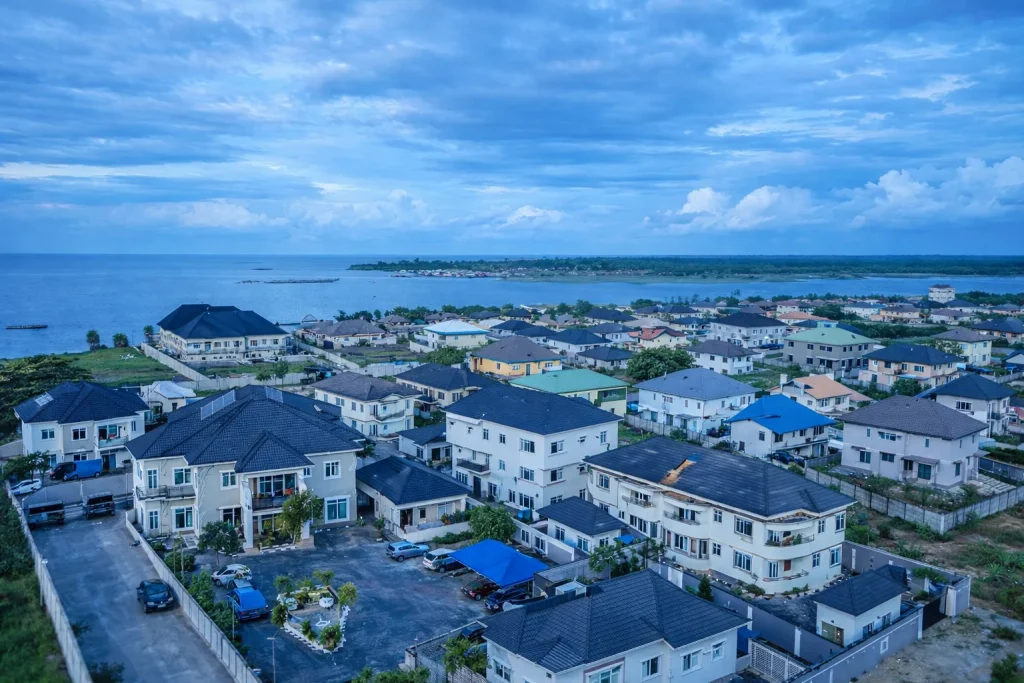
Ajah benefits from being predominantly estate-driven. Gated communities like Abraham Adesanya Estate, Pinnock Beach Estate, Thomas Estate, and Lakowe Lakes provide 24/7 security, perimeter fencing, and controlled access.
Outside of gated estates, security is typical of suburban Lagos — adequate along major roads but weaker on poorly lit interior streets. Community policing and private security patrols are common in established neighborhoods.
Crime rates are generally lower than inner-city Lagos locations like Mushin, Oshodi, or Ajegunle. However, the rapid population growth in the Ajah corridor has strained existing policing infrastructure, and residents in newer developments occasionally report slow emergency response times.
Who Is Buying in Ajah?
The buyer profile in Ajah reflects its mid-market positioning.
Young professionals (28–40) — first-time buyers priced out of Lekki Phase 1 and Victoria Island. They want modern estates with good security within commuting distance of island workplaces.
Diaspora investors — Nigerians abroad looking for affordable entry into Lagos real estate. Ajah’s price point (₦50M–₦150M) fits diaspora budgets better than island properties.
Rental income investors — seeking the 6%–9% yields that Ajah delivers. Many buy 2–3 bedroom flats in new estates specifically for the short-let or traditional rental market.
Land bankers — buying undeveloped plots in Sangotedo and the Ajah-Ibeju border area, betting on the infrastructure-driven appreciation that has historically produced 200%–400% returns over 7–10 year periods in Lagos.
Ajah Sub-Area Comparison
Not all parts of Ajah are equal. Here’s a data snapshot of the key sub-areas:
| Sub-Area | Land Price (per plot) | Key Feature | Flood Risk | Maturity |
|---|---|---|---|---|
| Abraham Adesanya | ₦50M – ₦80M | Premium estates, best infrastructure | Low | Mature |
| Thomas Estate | ₦40M – ₦65M | Established gated community | Low | Mature |
| Sangotedo | ₦20M – ₦45M | Growth area, rapid development | Medium | Developing |
| Addo Road | ₦30M – ₦55M | Fourth Mainland Bridge proximity | Medium-High | Maturing |
| Ogombo | ₦15M – ₦35M | Affordable, less infrastructure | Medium | Early |
| Ado-Ajah | ₦25M – ₦40M | Central Ajah, mixed commercial/residential | Medium | Mature |
Conclusion
The data doesn’t whisper — it shouts. Ajah recorded the highest transaction volume growth of any Lagos neighborhood in 2025, offers rental yields double what premium island locations deliver, and sits at the epicenter of Lagos’s most transformative infrastructure projects.
Is it perfect? No. Flood risk in some sub-areas is real. Traffic congestion, though improving, is still a daily challenge. Infrastructure is catching up to population growth, not ahead of it.
But for buyers and investors evaluating Lagos real estate with data rather than prestige, Ajah is where the numbers make the most sense in 2026. The pattern is clear: Ajah today is what Lekki Phase 1 was in 2010 — affordable, fast-growing, and about to be permanently transformed by infrastructure.
Plot Insider tracks the data that drives these decisions. For more location intelligence, market pricing, and infrastructure analysis across Lagos, Abuja, and Nigerian property markets, visit our homepage.
FAQs
Is Ajah a good place to buy property in Lagos?
Yes — based on current market data, Ajah offers some of the best value in Lagos. Entry prices are 60%–75% lower than Lekki Phase 1, rental yields (6%–9%) outperform island locations, and the Fourth Mainland Bridge plus Coastal Road projects are expected to drive significant appreciation. However, buyers should verify flood risk on specific plots and inspect during the rainy season.
What is the average price of a house in Ajah in 2026?
The average listed price for houses in Ajah is ₦155 million, according to Nigeria Property Centre. A 2-bedroom flat starts from ₦35 million, 3-bedroom terraces range from ₦80 million to ₦160 million, and 4-bedroom detached homes range from ₦150 million to ₦400 million, depending on estate, finishing, and exact location.
Is Ajah safe to live in?
Ajah is generally safe, particularly within gated estates like Abraham Adesanya, Thomas Estate, and Pinnock Beach Estate, which provide 24/7 security and controlled access. Outside gated communities, security is comparable to other suburban Lagos areas. Crime rates are lower than inner-city neighborhoods, though rapid population growth is stretching existing policing resources.
Does Ajah flood?
Parts of Ajah experience seasonal flooding during the June–September rainy season, particularly low-lying areas along Addo Road and near drainage channels. However, higher-elevation sub-areas like Abraham Adesanya and Thomas Estate report significantly fewer flooding incidents. Always inspect a property during the rainy season before purchasing.
Sources
- Private Property Nigeria — Ajah Transaction Volume Analysis, Q4 2024–Q4 2025
- Nigeria Property Centre — Ajah Listings Data and Average Prices, 2026
- The Africanvestor — Lagos Property Market Data and Rental Yields, 2026
- Lagos State Bureau of Statistics — Private Sector Real Estate Investment Data, 2025
- Knight Frank Nigeria — H1 2025 Lagos Market Report