

ABUJA, Thursday, October 1, 2026. Nigeria’s housing deficit stands at about 15 million units as the country marks 66 years of independence, according to the Federal Government’s National Housing Data Technical Committee.
Key facts
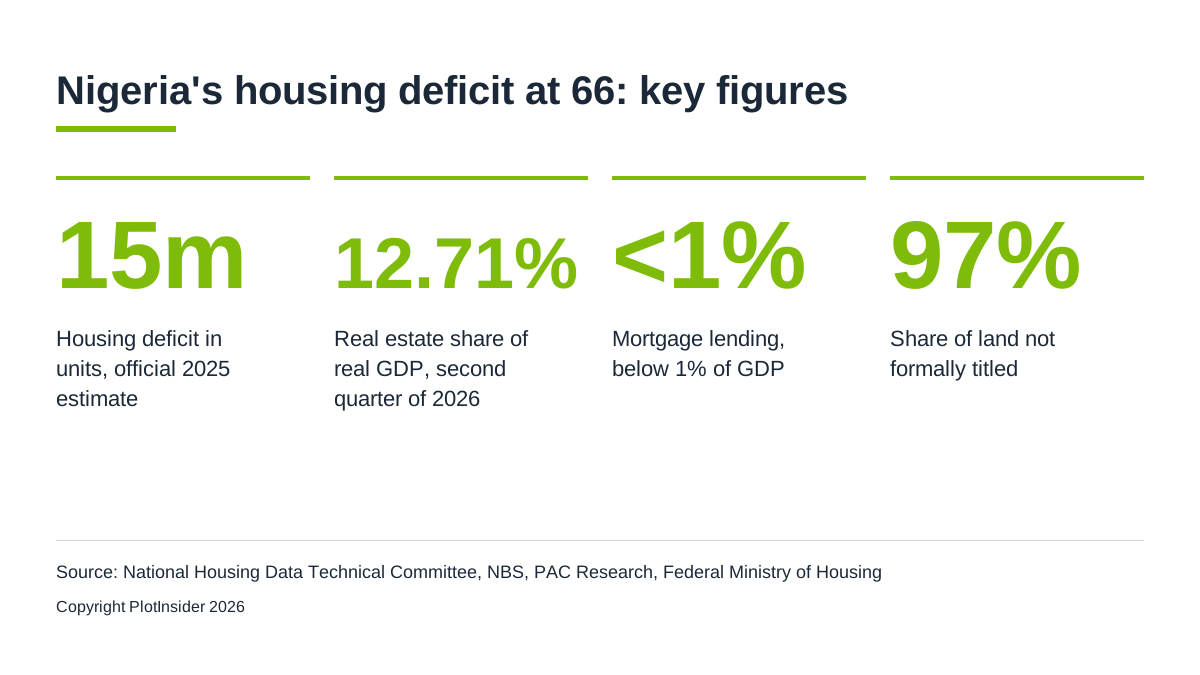
- Nigeria’s housing deficit was put at 14.925 million units for 2025 by the National Housing Data Technical Committee in January 2026.
- Real estate made up 12.71 per cent of Nigeria’s real GDP in the second quarter of 2026, National Bureau of Statistics data showed.
- Mortgage lending in Nigeria is below 1 per cent of GDP, compared with 31 per cent in South Africa, according to PAC Research.
- The Federal Government’s Renewed Hope Housing Programme targets 100,000 homes, with more than 15,000 units under construction, The Guardian reported.
- About six million workers pay into the National Housing Fund, but the Federal Mortgage Bank of Nigeria books fewer than 500 mortgages, Housing Minister Muttaqha Rabe Darma said.
How big is Nigeria’s housing deficit at 66
Nigeria’s housing deficit was 14.925 million units in 2025, Dr Taofeek Olatinwo, Chairman of the National Housing Data Technical Committee, said in January 2026, allAfrica reported. The committee worked with the National Bureau of Statistics, the National Population Commission and the Central Bank of Nigeria to produce the figure.
The effective shortage could be close to 28 million units, Moruf Akinderu-Fatai, Lagos State Commissioner for Housing, said in May 2026, Channels Television reported. Akinderu-Fatai said that figure adds about 15.2 million structurally defective or substandard homes to the official deficit.
Nigeria needs about 550,000 new homes a year and roughly ₦5.5 trillion over the next decade to close the gap, The Guardian reported on September 28, 2026.
Nigeria’s housing in numbers
Real estate contributed 12.71 per cent of Nigeria’s real GDP in the second quarter of 2026, making it the third largest sector after trade and crop production, Daily Trust reported, citing the National Bureau of Statistics. The sector grew 3.76 per cent year on year, while construction grew 6.75 per cent.
Mortgage finance remains small. Nigeria’s mortgage market is below 1 per cent of GDP, compared with 77 per cent in the United States and 31 per cent in South Africa, PAC Research said in a report covered by Daily Trust.
Building costs have risen sharply. A 50kg bag of cement sold for about ₦14,500 to ₦15,000, and reinforcement steel for ₦1.2 million to ₦1.5 million per tonne, The Guardian reported.
Land titling is another constraint. More than 97 per cent of land in Nigeria is not formally titled, former Housing Minister Ahmed Musa Dangiwa said in August 2025, Vanguard reported.
What the APC government has done on housing
The APC-led Federal Government’s main housing scheme is the Renewed Hope Housing Programme, which targets 100,000 homes nationwide, The Guardian reported. Work has started on more than 3,000 units in Abuja. A 2,000-unit housing city at Ibeju-Lekki, Lagos, has reached an advanced stage with sales underway, according to the newspaper.
The government has said 1,859 families in 25 states secured mortgages worth ₦128 billion through the Ministry of Finance Incorporated (MOFI) Real Estate Investment Fund, at a fixed rate of 9.75 per cent over 20 years.
The Federal Government also launched a land titling programme that aims to raise formal titling coverage to 50 per cent within a decade, Vanguard reported.
The Federal Mortgage Bank of Nigeria (FMBN) handed keys to 129 rent-to-own beneficiaries in August 2026, Vanguard reported.
Changes at the Housing Ministry
President Bola Ahmed Tinubu swore in Dr Muttaqha Rabe Darma as Minister of Housing and Urban Development on April 24, 2026, after Dangiwa resigned, PRNigeria reported.
Darma said on September 25, 2026, that the Federal Government would upgrade and complete viable abandoned housing estates across the country before the end of the year, The Guardian reported.
Darma has also pointed to gaps in housing finance. About six million Nigerians pay ₦120 billion to ₦150 billion into the National Housing Fund each year, while FMBN books fewer than 500 mortgages, Darma said, Nigeria Housing Market reported.
The way forward on Nigeria’s housing deficit, according to industry groups
Housing industry groups say mortgage guarantees, foreclosure laws and dedicated funding are needed to close the housing gap.
Festus Adebayo, Executive Director of the Housing Development Advocacy Network (HDAN), has called for a government-backed mortgage guarantee system for low-income and informal sector workers, efficient foreclosure laws and tax relief for affordable housing, Nairametrics reported. “Housing is not just a real estate issue; it is economic infrastructure,” Adebayo said.
ESV Bature Ali Muhammad, President of the Nigerian Institution of Estate Surveyors and Valuers (NIESV), said increasing supply was the most sustainable answer to rising rents and urged the government to avoid rent controls, Nigeria Housing Market reported.
Background
Nigeria gained independence from Britain on October 1, 1960. Land in Nigeria is administered largely by state governments under the Land Use Act of 1978, so land reform depends on state cooperation.
What happens next
Darma has pledged to complete viable abandoned federal housing estates by the end of 2026. Housing is also expected to feature in campaigns for the 2027 general elections, and several parties have already published housing proposals.
Frequently asked questions about Nigeria’s housing deficit
What is Nigeria’s housing deficit in 2026?
The deficit is about 15 million units, based on the National Housing Data Technical Committee’s figure of 14.925 million units for 2025. The Lagos State Government has said the effective shortage could approach 28 million units when substandard homes are included.
How much does real estate contribute to Nigeria’s GDP?
Real estate contributed 12.71 per cent of Nigeria’s real GDP in the second quarter of 2026, according to National Bureau of Statistics data reported by Daily Trust. It was the third largest sector of the economy.
What has the Tinubu government done about housing?
The Tinubu government runs the Renewed Hope Housing Programme, which targets 100,000 homes, The Guardian reported. The government has also said 1,859 families secured ₦128 billion in mortgages at 9.75 per cent through the MOFI Real Estate Investment Fund.
Who is Nigeria’s housing minister?
Dr Muttaqha Rabe Darma is Nigeria’s Minister of Housing and Urban Development. President Tinubu swore him in on April 24, 2026, after Ahmed Musa Dangiwa resigned.