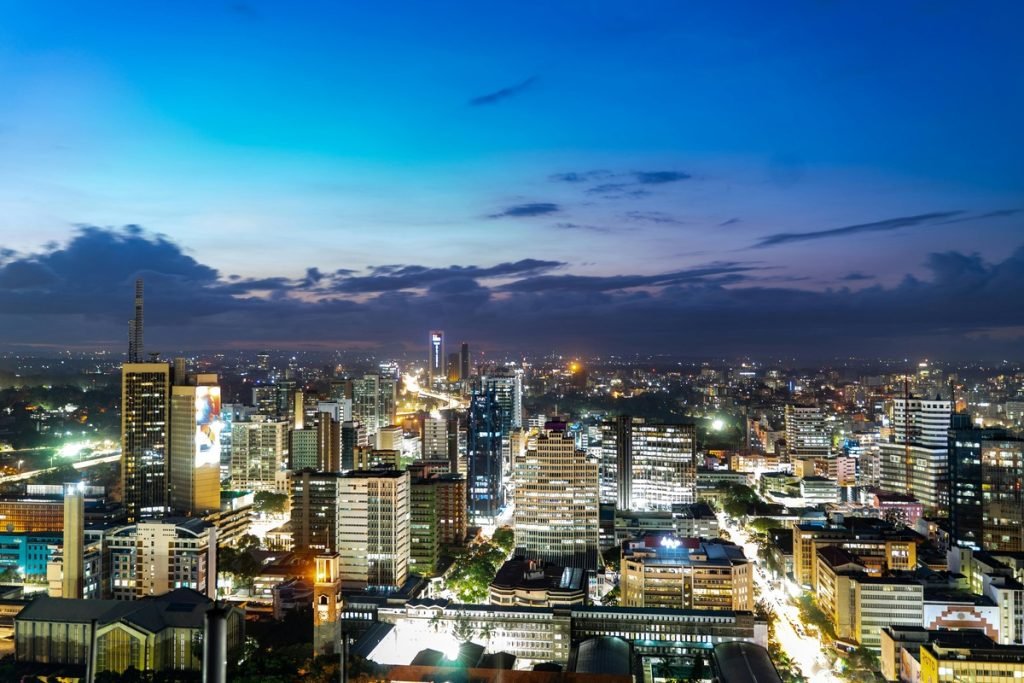
11.4% per year. For ten years straight.
That’s the compound annual growth rate for land across the Nairobi Metropolitan Area, according to Cytonn Investment’s NMA Land Report. Not stocks. Not crypto. Not bonds. Land.
Kenya’s property market operates differently from Nigeria’s — it’s more institutionalized, better documented, and supported by a functioning mortgage market. But the core principle is identical: land in the right location, bought at the right time, builds wealth faster than almost any other asset class in Africa.
This is Plot Insider’s first deep dive into Kenya’s land market. We’re bringing the same data-first approach that covers Nigeria’s real estate landscape — verified prices, appreciation rates, and investment-grade location analysis.
Key Takeaways
- Land in the Nairobi Metropolitan Area has appreciated at a 10-year CAGR of 11.4%, with average selling prices reaching KSh 126.8 million per acre, according to Cytonn Investment’s NMA Land Report.
- Satellite towns around Nairobi (Kitengela, Juja, Syokimau, Athi River) have delivered even stronger returns — a 14.2% average CAGR over 11 years, with individual towns like Syokimau posting 23.9% annual appreciation.
- Prime Nairobi land prices now exceed KSh 500 million per acre in Upper Hill and KSh 300 million in Spring Valley — driven by commercial demand, zoning flexibility, and land scarcity.
- The highest-value entry points for 2026 are Nairobi satellite towns (KSh 5M–25M/acre), the Mombasa-Diani coastal corridor (KSh 5M–20M/acre), and emerging towns like Nanyuki and Naivasha (KSh 800K–3M/acre).
- Infrastructure is the single strongest predictor of land appreciation in Kenya. The Nairobi Expressway, Thika Superhighway, and SGR corridor have consistently created 20%–50% price jumps in adjacent areas.
How Land Appreciation Works in Kenya
Land appreciation is the increase in a plot’s market value over time. Unlike buildings — which depreciate as they age — land typically increases in value because supply is fixed while demand grows with population and economic activity.
In Kenya, three forces drive appreciation more than anything else.
Infrastructure development. New roads, railways, water systems, and electricity connections create immediate price jumps. The Thika Superhighway (completed 2012) triggered 100%+ appreciation in towns along its corridor within 3 years. The Nairobi Expressway (completed 2022) has done the same for areas like Syokimau and Mlolongo.
Population growth and urbanization. Kenya’s population exceeds 56 million, with urbanization at roughly 28% and climbing. Nairobi alone absorbs hundreds of thousands of new residents annually, creating relentless demand for housing — and the land to build it on.
Zoning and land use changes. When agricultural land is rezoned for residential or commercial use, its value can increase 5x–10x overnight. County development plans signal where these changes will happen, giving informed investors an early-mover advantage.
The Data: 10 Years of Kenyan Land Appreciation
The most rigorous land price data for Kenya comes from Cytonn Investment’s annual Nairobi Metropolitan Area Land Reports. Here’s what the numbers show.
Nairobi Metropolitan Area (Overall)
| Metric | Data |
|---|---|
| 10-year average CAGR | 11.4% |
| Average selling price (2023) | KSh 126.8M per acre |
| YoY appreciation (2022–2023) | 3.2% |
| Previous year appreciation (2021) | 1.5% |
Nairobi Prime Suburbs (2025)
The highest-value land in Kenya — and some of the most expensive in East Africa:
| Suburb | Price per Acre (KSh) | YoY Growth | Primary Driver |
|---|---|---|---|
| Upper Hill | KSh 555M | +9.6% | Commercial/office demand |
| Westlands | KSh 450M+ | +7%–10% | Mixed-use, tech company HQs |
| Kilimani | KSh 400M+ | +6%–8% | High-density residential + commercial |
| Spring Valley | KSh 306M | +13% | Residential premium, land scarcity |
| Karen | KSh 45M–100M | +5%–8% | Low-density luxury residential |
| Muthangari | KSh 400M+ | +6%–9% | Proximity to Westlands corridor |
Nairobi Satellite Towns (Where the Growth Is Strongest)
This is where the real opportunity lies. Satellite towns delivered a collective 14.2% average CAGR over 11 years — outperforming the broader Nairobi market.
| Satellite Town | Avg. Price/Acre (KSh) | YoY Growth | 11-Year CAGR | Key Driver |
|---|---|---|---|---|
| Syokimau | KSh 17.2M | +23.9% | 16%+ | Expressway + commuter rail |
| Athi River | KSh 15M–20M | +19.2% | 14%+ | Mombasa Road access, industrial |
| Juja | KSh 12M–18M | +8%–12% | 13%+ | Thika Superhighway, university |
| Kitengela | KSh 10M–25M | +7%–10% | 12%+ | Nairobi spillover, affordability |
| Ruiru | KSh 15M–25M | +8%–11% | 13%+ | Thika Road, estate development |
| Thika | KSh 8M–15M | +6%–9% | 11%+ | Industrial corridor, Superhighway |
| Ngong | KSh 10M–20M | +7%–10% | 12%+ | Southern bypass access |
| Rongai | KSh 8M–12M | -6.1% (correction) | 10%+ | Reduced transactions in review period |
Key finding: Syokimau posted 23.9% annual appreciation — the highest of any satellite town — driven by its strategic location along the Nairobi Expressway and the presence of a commuter rail network. This validates the infrastructure thesis: proximity to transport corridors is the strongest predictor of land value growth.
8 Locations to Invest in Kenyan Land (2026)
Based on the appreciation data, infrastructure pipeline, and current pricing, these are the strongest investment locations across Kenya right now.
1. Kitengela (Nairobi Satellite — KSh 10M–25M/acre)
Kitengela is Kenya’s equivalent of Lagos’s Ajah corridor — the most active mid-market growth zone serving Nairobi’s overflowing population. It sits along the Nairobi-Namanga highway with direct access to the Nairobi Expressway via the Southern Bypass.
Plot prices have increased from KSh 3–5M per acre a decade ago to KSh 10–25M today. The area absorbs first-time buyers and young families priced out of Nairobi proper.
Best for: Residential land banking, estate development, mid-market rental properties.
2. Syokimau / Mlolongo (KSh 15M–25M/acre)
The data champion. At 23.9% YoY appreciation, Syokimau is the fastest-appreciating satellite town in the Nairobi Metropolitan Area. The Nairobi Expressway and commuter rail station have transformed this area from a sleepy dormitory town into a connected urban suburb.
Best for: Transit-oriented development, apartment construction, commercial plots near the expressway.
3. Juja / Ruiru (KSh 12M–25M/acre)
The Thika Superhighway corridor remains one of Kenya’s most proven appreciation zones. Juja benefits from Jomo Kenyatta University of Agriculture and Technology (JKUAT), driving student housing demand. Ruiru has attracted major estate developers including Tatu City — a 5,000-acre integrated mixed-use development.
Best for: Student housing, gated community development, land banking along the Thika corridor.
4. Konza Technopolis Corridor (KSh 2M–8M/acre)
Kenya’s “Silicon Savannah” — Konza Technopolis is a government-backed smart city project 64km south of Nairobi. While development has been slower than initially promised, surrounding land has already appreciated significantly. As infrastructure materializes (data centers, tech parks, universities), early land buyers are positioned for substantial returns.
Best for: Long-term land banking (5–10 year horizon), speculative investment near Africa’s planned tech city.
5. Nakuru (KSh 3M–15M/acre)
Kenya’s fourth-largest city received city status in 2021, triggering accelerated infrastructure investment and land demand. The Nairobi-Nakuru highway improvement and the Nakuru-Kisumu road expansion are driving appreciation in peri-urban zones.
Nakuru offers some of the best value in Kenya — prices are a fraction of Nairobi satellite towns while benefiting from genuine economic growth as a regional hub.
Best for: Agricultural land (Rift Valley farming), residential development, commercial plots in the growing CBD.
6. Mombasa / Diani Coast (KSh 5M–20M/acre)
Kenya’s coastal corridor is a dual-demand market: local residential growth plus international tourism investment. Diani’s tourism boom has pushed prime beachfront plots to KSh 20M+ per acre, while urban Mombasa remains more affordable at KSh 5M–15M for development land.
The completion of the Makupa Bridge and the planned dualling of the Mombasa-Malindi road are catalysts for further appreciation.
Best for: Tourism/hospitality development, Airbnb investment properties, beachfront land banking.
7. Nanyuki (KSh 800K–3.5M/acre)
Nanyuki sits at the foot of Mount Kenya and has become a lifestyle and retirement destination for Nairobi’s upper-middle class. It’s also a military town (hosting the British Army Training Unit), providing stable demand. Land is still remarkably affordable — a fraction of Nairobi satellite prices.
Best for: Lifestyle/holiday home development, eco-tourism, agricultural investment, long-term land banking.
8. Naivasha (KSh 1.5M–5M/acre)
Naivasha benefits from the flower farming industry (Kenya’s largest export), Lake Naivasha tourism, and improving road connectivity to Nairobi. The SGR extension and geothermal energy investments in the Rift Valley further support long-term growth.
Best for: Agricultural land (flower farming, horticulture), lakeside hospitality, industrial/logistics plots.
Kenya vs Nigeria: How Land Appreciation Compares
For Plot Insider readers familiar with Nigeria’s land market, here’s how Kenya compares:
| Factor | Kenya | Nigeria |
|---|---|---|
| 10-year land CAGR | 11.4% (Nairobi Metro) | ~18% nominal (Lagos), ~5% real |
| Mortgage penetration | ~3% of GDP | <1% of GDP |
| Land registry system | Digitizing (improving) | Mostly paper-based (slow) |
| Title security | Relatively strong | Highly variable by state |
| Foreign ownership | Leasehold (99 years) | Leasehold (99 years via Land Use Act) |
| Entry price (affordable land) | KSh 800K (~$6K) per acre | ₦700K (~$480) per plot |
| Entry price (growth corridor) | KSh 10M–25M (~$77K–193K) per acre | ₦15M–50M (~$10K–34K) per plot |
| Highest premium | KSh 555M/acre (Upper Hill) | ₦500M+/plot (Banana Island) |
| Key risk | Fake titles, speculative bubbles | Title fraud, government acquisition |
Key insight: Nigeria offers lower absolute entry costs (a plot in Ogun State at ₦700K = ~$480, vs Kenya’s cheapest at ~$6,000 per acre). But Kenya offers better title security, a more developed mortgage market, and more institutional data on appreciation rates. Both markets reward infrastructure-adjacent buying and punish undocumented transactions.
What Drives Appreciation: The 5 Signals to Watch
Before buying land anywhere in Kenya, look for these five data-backed signals:
New road construction or expansion. Every major Kenyan road project — Thika Superhighway, Nairobi Expressway, Southern Bypass — created 20%–50% price jumps in adjacent land within 2–3 years of completion.
County development plans. Kenya’s 47 county governments publish development plans indicating where new infrastructure, zoning changes, and public services will be directed. These are publicly available and free to access.
Population migration patterns. Track which towns are absorbing Nairobi’s overflow. If new estates, schools, and hospitals are appearing, land demand is rising.
Title deed availability. Land with a clean title deed (freehold or leasehold) appreciates faster than land with unresolved succession or community ownership issues. Always verify at the Ministry of Lands.
Proximity to economic anchors. Universities (Juja), military bases (Nanyuki), industrial zones (Athi River), tech parks (Konza), and tourism destinations (Diani, Nanyuki) create guaranteed, sustained demand.
Conclusion
Kenya’s land market delivers what the data promises: 11.4% compounded annual returns over a decade, with satellite towns exceeding 14% and individual locations like Syokimau hitting 24% in a single year. These aren’t projections — they’re verified historical returns from one of Africa’s most transparent property markets.
For investors looking beyond Nigeria, Kenya offers a compelling case: stronger title infrastructure, better institutional data, and a mature mortgage market that expands the buyer pool. The entry costs are higher than Nigeria in absolute terms, but the risk-adjusted returns and documentation security often justify the premium.
Plot Insider is expanding its coverage across Africa’s most dynamic real estate markets — because the story of land isn’t limited by borders. Explore more data-driven analysis on our homepage, and compare this with our Nigeria land price index to see how the two markets stack up.
FAQs
How fast does land appreciate in Kenya?
The Nairobi Metropolitan Area has delivered an average 11.4% compound annual growth rate over 10 years, according to Cytonn Investment. Satellite towns like Syokimau, Athi River, and Juja have outperformed at 14%–24% annually. Rural and agricultural land appreciates more slowly (3%–8%) unless triggered by infrastructure development.
Where is the best place to buy land in Kenya in 2026?
For growth: Kitengela, Syokimau, and Juja offer the strongest appreciation data near Nairobi. For value: Nanyuki and Naivasha offer affordable entry points with strong long-term fundamentals. For tourism: Diani and Mombasa coast offer dual-demand from residential and hospitality markets. The best location depends on your capital, timeline, and investment goal.
How much does an acre of land cost in Kenya?
Prices range from KSh 100,000 ($770) in remote rural areas to over KSh 500 million ($3.8M) in Nairobi’s Upper Hill. Satellite towns around Nairobi range from KSh 5M–25M ($38K–193K) per acre. Coastal land averages KSh 5M–20M ($38K–154K). Emerging towns like Nanyuki and Naivasha start from KSh 800K–3.5M ($6K–27K) per acre.
Can foreigners buy land in Kenya?
Yes, but with restrictions. Foreigners can acquire leasehold interest (up to 99 years) but cannot own freehold land in Kenya, per the 2010 Constitution. The process requires registration at the Ministry of Lands, title verification, and typically the engagement of a Kenyan lawyer. Agricultural land purchases by non-citizens face additional restrictions.
Sources
- Cytonn Investment — Nairobi Metropolitan Area Land Report 2023
- Ramsey Focus Media — Nairobi Land Prices Surge in 2025
- Beyond Forest — Land Prices in Kenya 2026 Guide