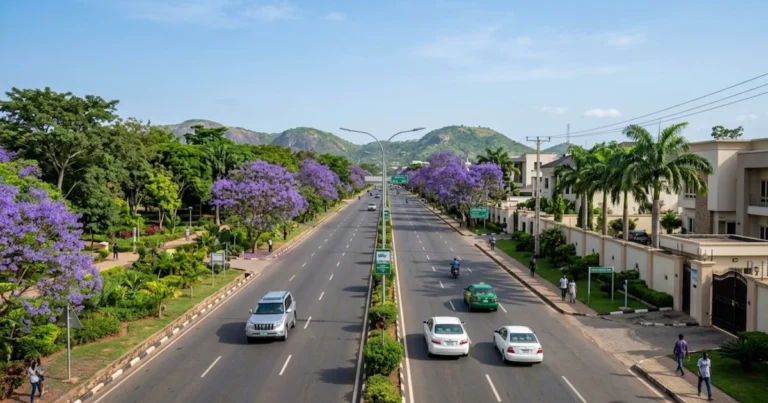



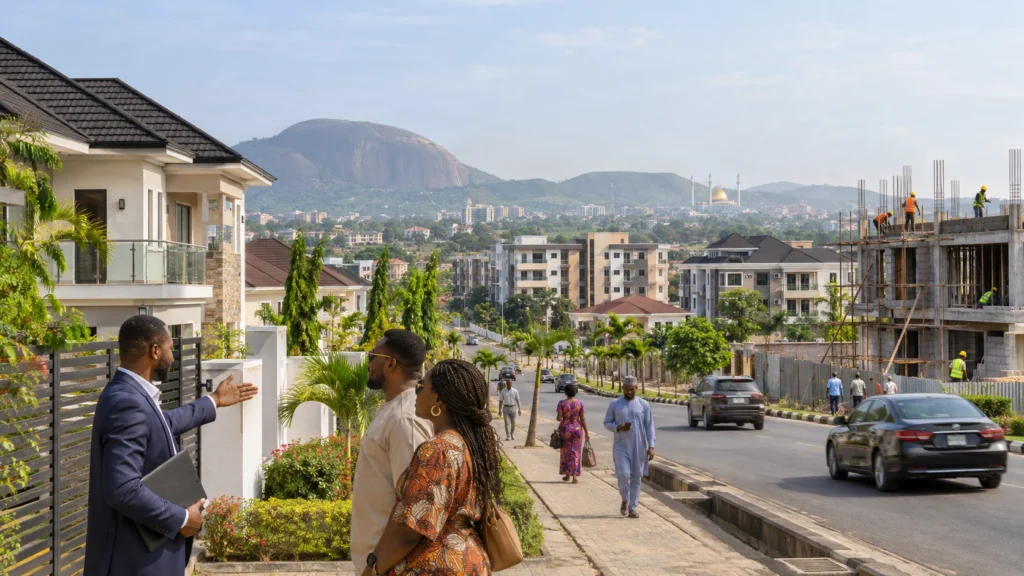
Abuja is a planned city that is easier to understand than many cities in Nigeria. The 1979 master plan basically laid out the city in phases and districts.
There are about 93 districts in Abuja, but people only know and search for the popular 19 districts. I wouldn’t even blame them because those 19 districts have a well-established real estate market, and as you know, investment is really a big thing. However, Abuja has more than Maitama, Asokoro, and Wuse.
This guide explains how the Abuja districts are organised. We’ll also explain the cost of living in different Abuja districts and the real estate investment opportunities available.
Key Takeaways
- Abuja has about 93 planned districts across five phases. The phases show how the city expands from its original centre.
- Phase 1 contains Abuja’s oldest districts. Maitama, Asokoro, and Wuse are part of this phase.
- Phase 2 surrounds the original city centre. Jabi, Utako, and Wuye are some of its popular districts.
- Phase 3 contains large residential districts. Gwarinpa and Lokogoma fall within this part of Abuja.
- Kubwa and Lugbe are commonly included in discussions about Abuja districts. Kubwa is in Bwari Area Council, while Lugbe is a satellite area under Abuja Municipal Area Council.
- The districts have different property markets. Maitama has the highest median asking price, while developing areas such as Karsana have more new housing projects.
How Are Abuja Districts Organised?
The Federal Capital City has five phases. The first phase forms the original centre, while the later phases extend farther from it.
The wider Federal Capital Territory has six area councils. These area councils are different from the five phases used to organise the planned city.
Phase 1 Abuja Districts
The original Phase 1 districts are Maitama, Wuse I, Wuse II, Garki I, Garki II, Asokoro and Central Area. Maitama Extension, Guzape, and Asokoro Extension were later added
Phase 1 is fully developed. Most federal ministries and national government buildings are located within this part of Abuja.
Maitama
Maitama is north of the Central Area. It is known for embassies and several government residences.
Asokoro
Asokoro is east of the Central Area. The Presidential Villa, ECOWAS Secretariat and several embassies are located there.
Wuse
Wuse is west of the Central Area and is divided into several zones. Wuse Market and the Abuja City Gate area are among its well-known locations.
Wuse 2 is a separate part of the district.
Garki
Garki is south of the Central Area and is one of Abuja’s oldest developed districts. It is divided into areas, not zones. Many government offices are found here.
Garki II is beside the original Garki district.
Central Area
The Central Area is Abuja’s administrative centre. You will find the National Assembly, the Federal Secretariat, and several corporate offices.
Residential property is limited because much of the district is used for government and commercial purposes.
Guzape
Guzape was added to Phase 1 after the original master plan. It now has private estates and new residential developments.
Phase 2 Abuja Districts
Phase 2 has 14 original districts. They are Katampe, Mabushi, Utako, Wuye, Durumi, Gudu, Jabi, Kado, Dakibiyu, Kaura, Duboyi, Gaduwa, Dutse, and Kukwaba National Park.
Katampe Extension was introduced later. Kukwaba National Park also forms part of Phase 2.
Jabi
Jabi is west of the city centre. The district is known for Jabi Lake, Jabi Lake Mall and a large residential property market.
Utako
Utako is beside Jabi and has one of Abuja’s main transport terminals. The district also contains offices and apartment buildings.
Wuye
Wuye is between Utako and the central parts of Abuja. Apartment blocks and private estates make up much of its residential market.
Mabushi
Mabushi is close to Wuse and Jabi. The district has private homes and apartment developments.
Katampe
Katampe is north of Mabushi. Katampe Extension has many newer homes, while the original district has a mix of completed buildings and ongoing developments.
Kado
Kado is west of Mabushi and close to Jabi. It is close to Life Camp and several roads leading towards Gwarinpa.
Gaduwa
The district recorded a median asking price of ₦476.9 million in October 2026.
Gaduwa is in the southern part of Phase 2. Its housing market contains apartment buildings and private estates.
The median asking price for flats and houses was ₦213.4 million.
Phase 3 Abuja Districts
Phase 3 has 18 districts. The completed or designed areas include Gwarinpa I, Mbora, Galadimawa, Dakwo, and Lokogoma.
The phase also contains two industrial areas. Gwarinpa II and the Institution and Research District are at a different stage of development.
Gwarinpa
Gwarinpa has one of the largest housing markets among the Abuja districts. Gwarinpa is northwest of Abuja’s central districts. It is known for the Gwarinpa Housing Estate and its numbered avenues.
Life Camp
Life Camp is west of the central city and close to Gwarinpa. The name originally referred to the residential camp used by construction workers during Abuja’s development.
Lokogoma
Lokogoma is in southern Abuja. It is close to Apo, Galadimawa, and the Outer Southern Expressway.
Galadimawa
Galadimawa is southwest of the central city. It lies between Lokogoma and Airport Road.
Phase 4 Abuja Districts
Phase 4 has 34 planned districts. Kagini has a completed design, while several other parts of the phase have been allocated to mass-housing projects.
Karsana is one of the most active development areas in this part of Abuja. New roads and the 3,112-unit Renewed Hope City have expanded the district.
Phase 5 Abuja Districts
Planning continues in Phase 5. Kyami is a properly designed district within the phase and is divided into Zones A, B, and C.
Abuja Area Councils and Satellite Towns
The Federal Capital Territory has six area councils:
- Abuja Municipal Area Council
- Bwari Area Council
- Gwagwalada Area Council
- Kuje Area Council
- Kwali Area Council
- Abaji Area Council
The five-phase city plan and the six area councils are not the same system. The planned Federal Capital City is mainly within the Abuja Municipal Area Council.
Kubwa falls under Bwari Area Council. Lugbe is within Abuja Municipal Area Council but it is outside the five-phase district structure.
What Does It Cost to Live Across Abuja Districts?
| Abuja area | General cost pattern |
|---|---|
| Maitama and Asokoro | Highest residential property costs |
| Wuse 2 | Expensive housing and commercial services |
| Garki | More varied housing and established markets |
| Jabi and Utako | High property prices within active commercial districts |
| Gwarinpa | Wider range of homes across several estates |
| Lokogoma and Galadimawa | Lower property prices than the central phases |
| Lugbe | Lower property prices outside the five-phase city |
| Kubwa | One of the lower-priced large residential markets in the FCT |
Property Prices Across the Main Abuja Districts
In October 2026, the median asking price for flats and houses was ₦291.8 million. Half of the advertised properties fell between ₦158.8 million and ₦557.6 million.
The table compares the main districts using the same October 2026 property index.
| Abuja district or area | Median asking price | Typical price range |
|---|---|---|
| Maitama | ₦1.18 billion | ₦620.6 million–₦2.13 billion |
| Asokoro | ₦857.1 million | ₦521.2 million–₦1.56 billion |
| Wuse 2 | ₦748.3 million | ₦393.7 million–₦1.22 billion |
| Utako | ₦615.4 million | ₦422.7 million–₦810.1 million |
| Guzape | ₦544.1 million | ₦375.5 million–₦844.9 million |
| Kado | ₦476.9 million | ₦333.5 million–₦643.9 million |
| Wuye | ₦396.8 million | ₦190.2 million–₦625.7 million |
| Jabi | ₦393.9 million | ₦234 million–₦770.9 million |
| Katampe | ₦322.2 million | ₦172.9 million–₦644.8 million |
| Mabushi | ₦315.1 million | ₦193.5 million–₦490.9 million |
| Gwarinpa | ₦265.5 million | ₦164.7 million–₦413.6 million |
| Galadimawa | ₦227.6 million | ₦151.3 million–₦366.9 million |
| Life Camp | ₦216.8 million | ₦129.5 million–₦331.4 million |
| Lokogoma | ₦214.3 million | ₦128.7 million–₦340.9 million |
| Karsana | ₦168.9 million | ₦87.4 million–₦267.6 million |
| Lugbe | ₦126.1 million | ₦72.2 million–₦210.9 million |
| Kubwa | ₦121.1 million | ₦78 million–₦186.9 million |
These are advertised prices rather than completed sale prices. The figures also combine flats and houses of different sizes.
Our Abuja property-price guide examines the city’s property market in more detail.
Real Estate Investment Opportunities Across Abuja Districts
The real estate opportunities in Abuja change from one district to another.
Phase 1
Maitama and Asokoro have Abuja’s main luxury residential markets. Most available properties are completed houses or existing buildings because the original Phase 1 districts are virtually fully developed.
Wuse 2 has a larger commercial market. Offices and retail plazas are common along its major roads.
Guzape has more new residential developments than the original Phase 1 districts. Apartment projects and private estates make up a noticeable part of its current market.
Read our guide to the wealthiest neighbourhoods in Abuja for more information about Abuja’s luxury property market.
Phase 2
Jabi and Utako have residential and commercial property. Their apartment markets are larger than those found in Maitama or Asokoro.
Mabushi and Wuye have many residential developments. Kado and Katampe have higher median asking prices than most other Phase 2 districts.
Phase 3
Gwarinpa has an established sales market with more than 1,500 advertised properties this month alone. Houses accounted for the largest share.
Lokogoma and Galadimawa have active estate development. Their median asking prices remain below the Abuja-wide figure.
Industrial Property
Idu has one of Abuja’s recognised industrial layouts. Warehouses and storage facilities form part of its property market.
The district also has a railway station connecting the Abuja light rail with the national rail network.
Developing Districts
Karsana recorded 90 sale enquiries for every 100 available listings in October 2026. Its property market includes new housing projects and undeveloped land.
Which Abuja Areas Have the Strongest Rental Demand?
Kyami also received a high number of sale enquiries. Its market remains smaller than Karsana’s.
Apo recorded the highest rental demand in Abuja in October. The district had 24.4 searches for every available listing.
Lugbe followed with 21.8 searches per listing. Idu Industrial recorded 19.7, while Lokogoma recorded 19.3.
| Abuja area | Rental searches per available listing |
|---|---|
| Apo | 24.4 |
| Lugbe | 21.8 |
| Idu Industrial | 19.7 |
| Lokogoma | 19.3 |
| Kubwa | 19.1 |
| Karu | 17.3 |
| Wuse | 13.4 |
| Kaura | 13.0 |
| Gwarinpa | 12.4 |
| Gudu | 12.0 |
Rental enquiries placed Lokogoma at the top. It received 292 enquiries for every 100 available properties.
Our Abuja rental-price guide explains the amounts charged across the city.
Where Are New Property Developments Expanding in Abuja?
Karsana has one of the largest current housing developments among the later Abuja districts. The Renewed Hope City has 3,112 housing units in Karsana West. It has a 10.5-kilometre access road network that connects the housing project with the rest of the district.
Phase 4 also contains land assigned to mass-housing and land-swap projects. Kagini is the properly designed district within that phase.
Kyami remains the only properly designed district in Phase 5. Its plan covers Zones A, B and C.
What Separates Abuja’s Established and Developing Districts?
An established district already has its main roads and a large number of completed buildings. Maitama, Wuse and Garki fall into this category.
A developing district still has major roads or housing construction in progress. Karsana and Kyami are examples.
The phase number does not always show how developed a place is. Gwarinpa belongs to Phase 3 but already has a large, active property market.
Conclusion
Abuja is a large city with numerous districts. districts. Phase 1 is the oldest developed parts of the city, while the later phases include large residential areas and new housing projects.
The popular district names are only a small part of Abuja’s full plan. Places such as Karsana and Kyamiare are not as popular as Maitama or Wuse, but they are part of Abuja districts.
Cost of living and property opportunities differ across the districts.
Frequently Asked Questions About Abuja Districts
How Many Districts Are in Abuja?
The Federal Capital City has about 93 districts across five phases. The plan also includes sector centres and industrial areas.
What Are the Most Popular Abuja Districts?
Maitama, Asokoro, Wuse, Garki and Jabi are among the most searched Abuja districts. Gwarinpa and Lokogoma also have large residential property markets.
What Are the Phase 1 Districts in Abuja?
The original Phase 1 districts are Maitama, Wuse I, Wuse II, Garki I, Garki II, Asokoro and Central Area. Guzape, Maitama Extension and Asokoro Extension were added later.
Is Lugbe One of the Abuja Districts?
Lugbe is a satellite area within Abuja Municipal Area Council. It is outside the Federal Capital City’s five-phase district structure.
Is Kubwa Part of Abuja?
Kubwa is in the Federal Capital Territory. It falls under Bwari Area Council.
Which Abuja District Has the Highest Property Prices?
Maitama had the highest median asking price in October 2026. The figure for flats and houses was ₦1.18 billion.
Which Abuja Districts Are Still Developing?
Karsana, Kagini and Kyami are among Abuja’s developing districts. Their current levels of infrastructure are not the same.
Sources
- Federal Capital Development Authority — official phase and district information.
- Nigeria Property Centre— October 2026 asking prices.
- TheCable — Karsana housing and road development.
- Areas in Abuja — district locations and area-council distinctions.